

'/%3E%3C/svg%3E)



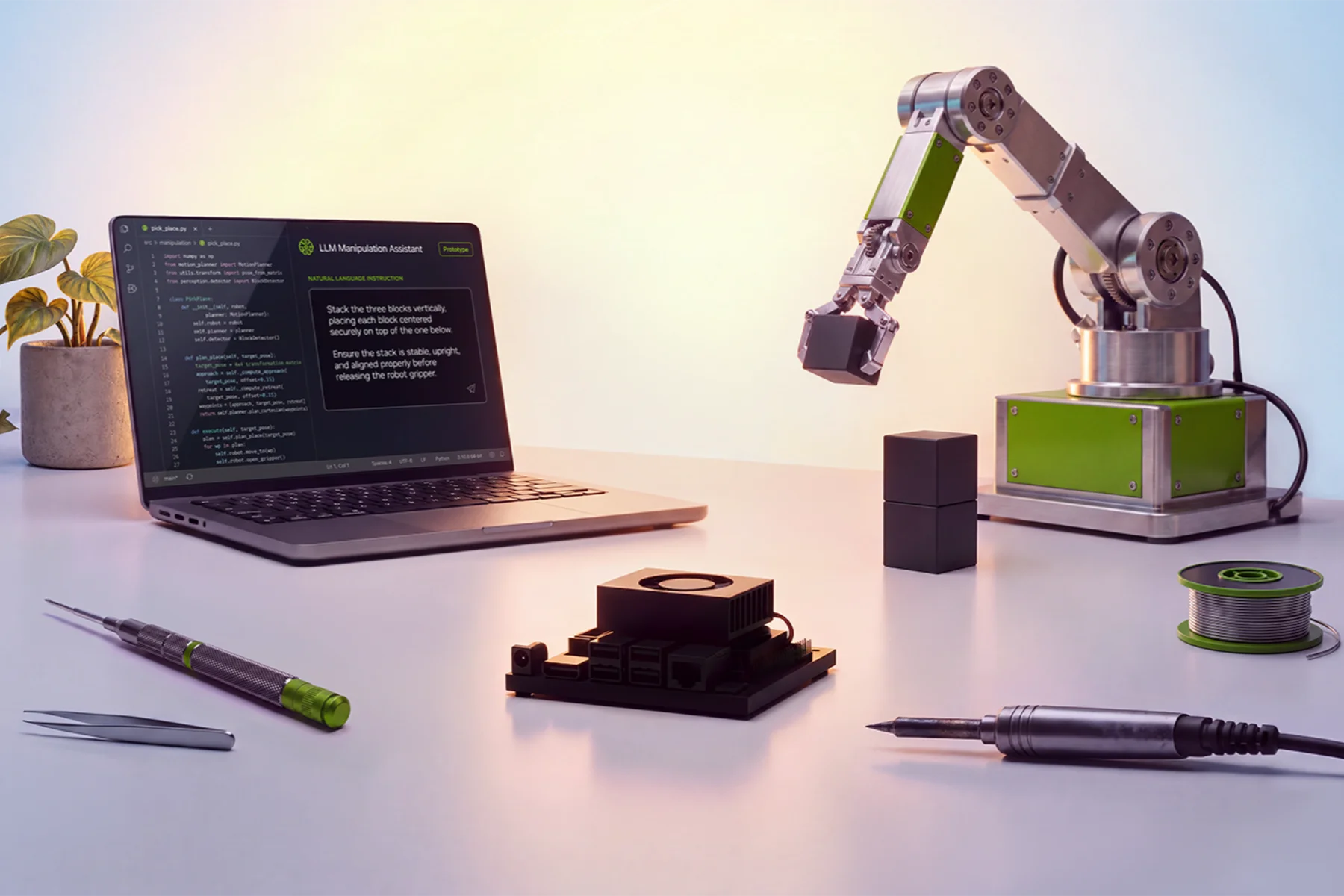
NVIDIA’s existing Jetson Orin Nano hardware already got a hefty 1.7x performance boost with the Jetson Orin Nano Super revision, also available to all pre-existing owners through an over-the-air update. It’s no secret that we’re fans of the Orin Nano, but you can only push old silicon so far before it needs a hardware refresh — and a refresh is what we’re getting, with NVIDIA introducing an all-new member of the Jetson Orin family: the Jetson Orin Nano 2.
Like every other Jetson board, the Jetson Orin Nano supports NVIDIA’s full AI software stack, and runs Jetpack, a customized version of Ubuntu tailored for running AI models on the edge. All of NVIDIA’s AI computers use a unified architecture, from the edge to the data center, so the software tools are portable and support developers, companies, and tinkerers through every step of design, development and deployment.
The Jetson Orin Nano 2 doesn’t shake the formula up too much: we’re still dealing with an 8-core Arm Cortex-A78 CPU, paired with 8 GB of RAM and an Ampere-based GPU. Despite that, the team over at NVIDIA ensured us that the silicon is brand new, and that under-the-hood architectural upgrades — namely, improved Tensor Cores and higher memory bandwidth — bring huge leaps in performance and energy efficiency. While we’re still unsure about the exact CPU and GPU clocks, we expect them to likely be a touch higher. Overall, the Jetson Orin Nano 2 now delivers up to 78 TOPS of INT8 compute, up from the Jetson Orin Nano Super’s 67 TOPS, and features an extended configurable TDP range of 15-40 W, up from 7-25 W.
On paper, perhaps these claims don’t seem terribly exciting. But there’s more beyond the numbers. For starters, NVIDIA claims that the Jetson Orin Nano 2 delivers the same level of performance as its predecessor while using only 60% of the power. In theory, this should mean that the new Orin Nano only draws 15 W to deliver the same level of performance that the old board required 25 W for.
But why does the Orin Nano 2 have a higher peak TDP then? Well, according to NVIDIA, that’s all extra performance. And while a 67-versus-78 TOPS figure might not seem that groundbreaking, especially for an extra 15 W, NVIDIA told us that the numbers aren’t quite directly comparable, and that architectural improvements give you a lot more, to put it simply, usable TOPS-per-TOPS. If you want direct performance figures, NVIDIA alleges a 2x overall performance increase in real-world tasks.
In fact, users replacing the older Jetson Orin Nano Super with the Jetson Orin Nano 2 aren’t expected to reach for these higher TDP configurations, which instead target users looking to migrate from older, but higher-end Jetson Orin NX modules in a bid to optimize end-product costs. Coincidentally, Jetson Orin NX modules also max out at a configurable 40 W TDP limit. By positioning the Jetson Orin Nano 2 both as a direct successor to the Orin Nano and a cheaper side-grade option for Orin NX users, NVIDIA seems to want to cover as much entry-level market ground as possible. We feel this strategy might end up being a rather clever move, especially in the face of the still-rising RAM prices.
The new Jetson Orin Nano 2 is expected to reach an important milestone for edge AI, enabling real-time conversational intelligence for millions of energy-efficient edge AI products.
“Today’s small and medium frontier models have reached the accuracy of last year’s largest frontier models […]. The Jetson Orin Nano 2 puts that breakthrough within reach of millions of developers, delivering the performance and energy efficiency needed for real-time reasoning in smart drones, robots and vision AI systems,” said Deepu Talla, NVIDIA’s vice president of robotics and edge AI.
While a number of NVIDIA’s partner companies are already working on products featuring the new board behind-the-scenes, the general public should expect to be able to get their hands on Jetson Orin Nano 2 modules and developer kits in the first half of 2027.
The older Jetson Orin Nano Super isn’t sunsetting just yet, as NVIDIA plans to remain committed to producing original Jetson Nano hardware until Q1 2032.

